The intimacy of clothing, the anticipation of an occasion, and the lives the garments lead.
In India, love has always found its way into the things we keep. People express their love by cooking for someone they love, by passing heirlooms down to their descendants. These gestures are part of everyday life. Affection seeps into different mediums, and these mediums become its carriers. One of the pre-loved ones is fashion, expressed mostly in the garments we carefully decide to pass onto which younger one. Clothes, especially, have a way of travelling through families: from one sibling to the next, from an aunt to her niece, from a mother to her daughter, and through all the permutations in between. One might have worn a grandmother’s silk saree reimagined as a tie or an uncle’s coat stitched to a dress. It is here that two different lives of a garment arise: one is anticipated and waiting to live another life, while the other carries the afterscent of a life lived.
Elie Saab, a Lebanese fashion designer and couturier, launched his eponymous fashion label in 1982 in Beirut at the age of 18 with his signature romantic, feminine silhouettes, intricate beadwork, delicate embroidery, crystals, lace, and fabric styling. In an interview with Vogue, Elie Saab says, “There is something very meaningful in seeing a piece passed on, or reinterpreted by each generation in their own way.” This re-wearing is not tied merely to reusing or repurposing the garment; it also speaks to how a garment can acquire meaning beyond its original wearer. H&M’s creative advisor, Ann-Sofie Johansson, in her conversation with Vogue India (2026) shares that beyond their utilitarian value, these pieces of clothing mean “a woman who has dreamt of a special occasion that’s not yet happened and is collecting and safeguarding these pieces for it.” The more important question here is: what happens to a garment between when it is imagined and when it is worn, and to the memories it is associated with? Elie Saab, whose reflections on women, craftsmanship, and garments, reinterpreted across generations, offer a way to understand dresses, shifting the conversation from the anticipation of dressing to the meaning a garment can acquire over time. For a House associated with intricate embellishment, considered craftsmanship and exquisite occasionwear, the question is not what a dress looks like when it enters a room, but what remains of it when the room has emptied and the evening has become a memory.
Perhaps this is what makes occasionwear such a fascinating business of appearances. Unlike the clothes we reach for without a second thought, an occasion demands a certain amount of rehearsal. We practise the evening in our heads long before we arrive at it: the way we shall carry ourselves, the impression we might leave, the version of ourselves we intend to present to the world. The dress, naturally, is made privy to these ambitions. Bought, tried on, put away and contemplated once more, it becomes an accomplice to a moment that has yet to unfold. Moreover, when the evening finally arrives, one can only wonder whether the woman who steps into the room resembles the one who had been rehearsing her entrance all those months ago.
A garment both lives and outlives the powerful time. It is created at one moment, chosen at another, and remembered in yet another. In India, one has often encountered the curious afterlife of a wedding lehenga, which, having witnessed its owner’s grand entrance, may return in the guise of a suit or a saree for the next generation. Thus, dear reader, while a woman may believe she has purchased a dress for one memorable evening, she may, in fact, have acquired a dress for multiple evenings. A lehenga that once witnessed its owner walk down the aisle may reappear years later as a suit or a saree, dressed for an entirely different occasion and perhaps belonging to an entirely different woman. One can only conclude that, in matters of fashion, as in matters of society, it is rarely wise to assume that a final bow shall follow a grand entrance.
Saab’s observation about pieces being reinterpreted by each generation speaks to this possibility. There is a difference between preserving something because it belongs to the past and continuing to find a place for it in the present. The former asks us to remember; the latter allows us to make new memories without abandoning the old ones. In this sense, the life of a garment is not measured by how often it is worn but by its utilitarian aspect of how many functions it can cover without ever being recognized as the one that was worn in some other relative’s wedding. In work associated with weddings and grand celebrations, attention to detail fosters a deeper relationship among the maker, the wearer, and the object itself. Not every dress is destined to become an heirloom, and maybe a woman might not wish to pass her clothes on. In that imagining, it is the consideration that a garment can hold a life beyond the one for which it was originally imagined.
Susan Sontag describes a photograph as “both a pseudo-presence and a token of absence.” Perhaps this is what makes photographs of occasions so peculiar. The photograph can encapsulate the sight but not the feeling. It may preserve the occasion without preserving the anticipation that precedes the evening, the experience of wearing the dress, the memory that follows and the possibility that someone else may one day encounter it differently.
In a 2022 conversation with Vogue India, Elie Saab speaks about the influence of the Mediterranean on his collections, particularly in his choice of materials and colours. He describes his interest in the region’s light and the warmth of shades such as sand, as well as the reflective quality of sequins. However, it is his account of his fragrances that brings the conversation closer to memory. “Lebanon inspired me when I created the Elie Saab fragrances; the scents used – like jasmine or orange blossom – are directly linked to my childhood in Lebanon,” he says. The perfume offering at the new Delhi boutique brings this part of the House into the same space as its clothing and accessories. The categories are different, but they need not be treated as separate worlds. A dress may be remembered through the photograph taken on the night it was worn; a fragrance may bring back the feeling of being there. Neither can preserve an experience in full. The garment, the scent and the accessories belong to different experiences, but they come together under the name of the House. In Delhi, that world now has a new physical address.
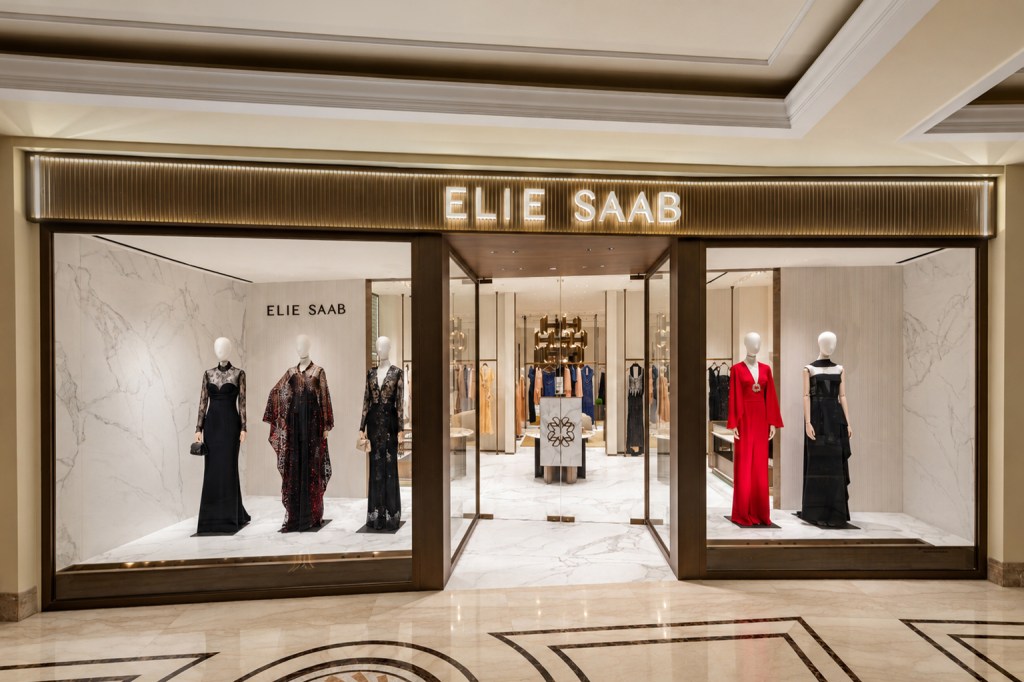
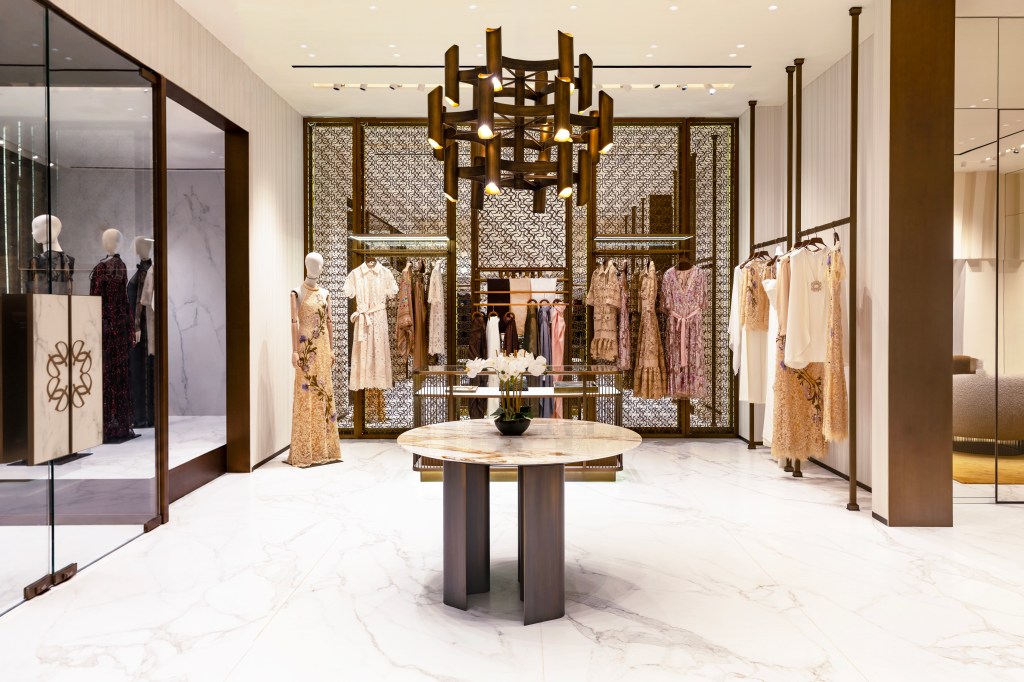
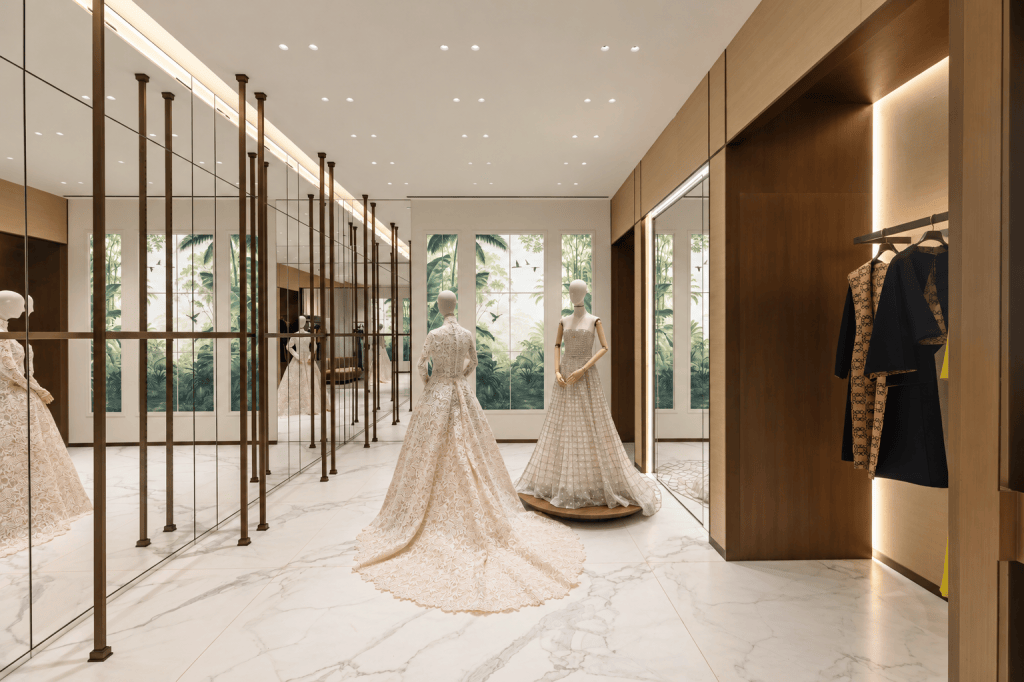
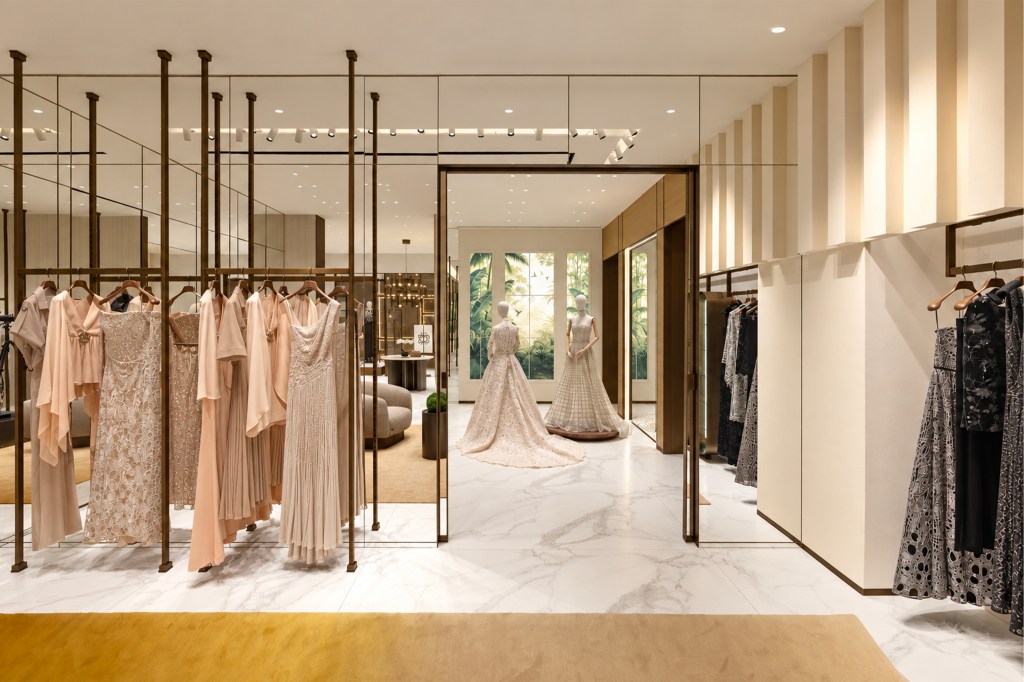
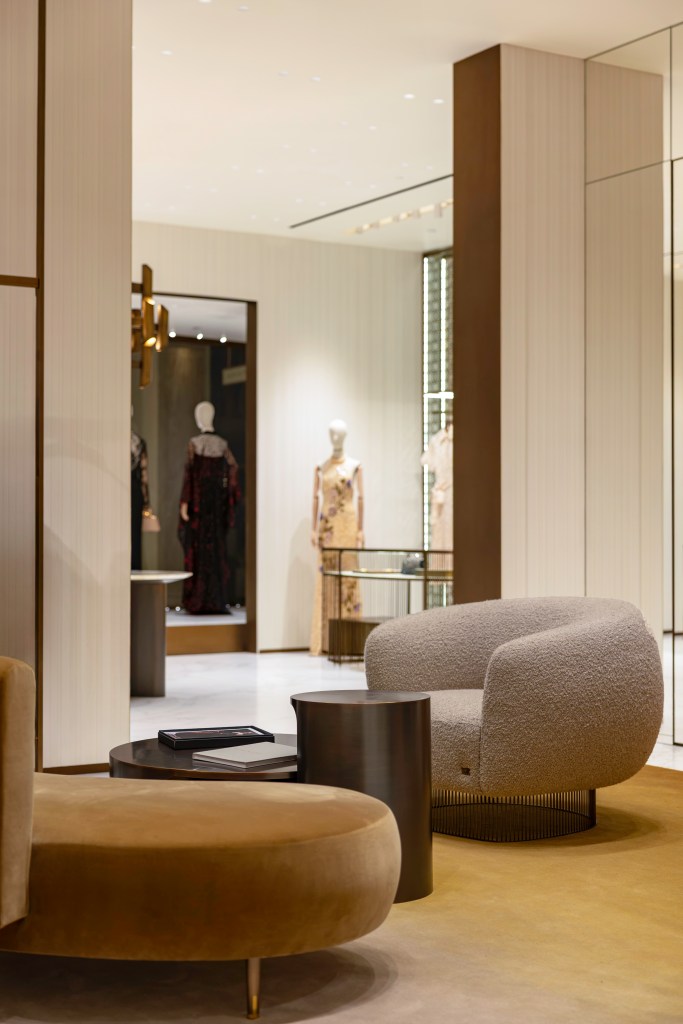
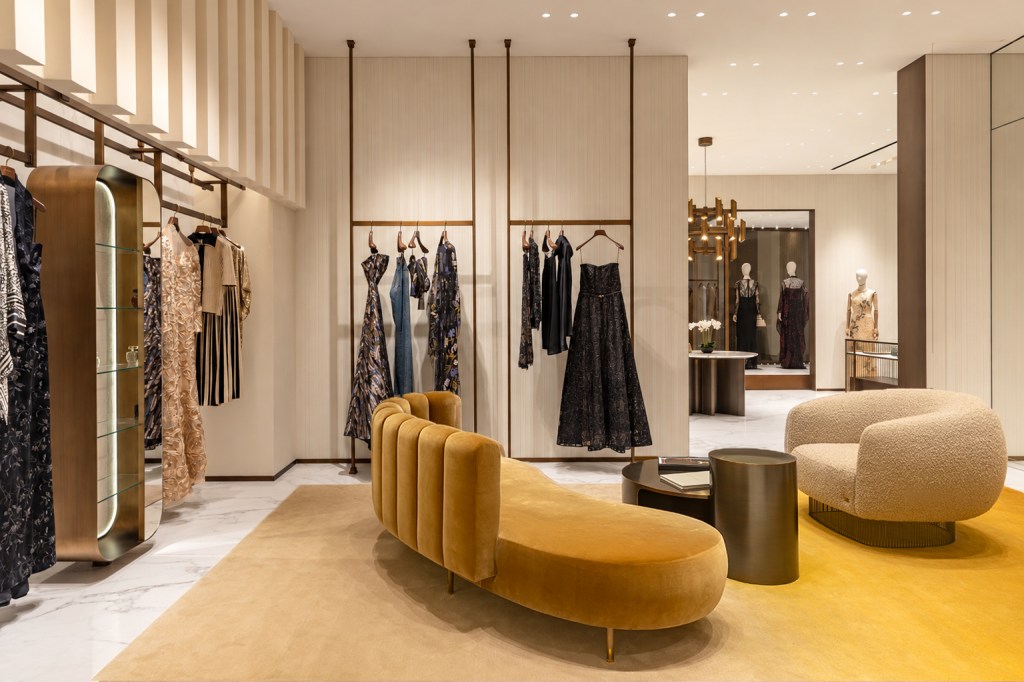
In October 2026, Elie Saab opened his eponymous first boutique in India. Spread across 161 square metres, the thoughtfully curated space brings together ready-to-wear perfumes, accessories, and kidswear. This marks a new chapter in the House’s presence in India, with weddings and celebrations having long formed part of this relationship. The boutique, then, gives a physical address to a relationship that has existed beyond its walls. There is something different about encountering a designer’s work in person. A dress seen in a photograph offers us a finished image; in a boutique, we encounter the clothes alongside the other elements that make up the world of the House. At DLF Emporio, white marble, bronzed brass, bespoke furnishings and wallpaper, along with an illuminated ELIE SAAB monogram, come together to form the interior. Each detail contributes to the space. It is not unlike the making of a garment, where the fabric, embroidery, embellishment and silhouette must find their place in relation to one another. What we eventually see is the finished piece, but what gives it character is the thought that has gone into bringing its elements together. The boutique also includes a private salon for personalised appointments and one-to-one service.
It is a detail worth considering in the context of Saab’s own understanding of the woman he designs for. In a 2019 interview with Vogue Australia, ELIE SAAB speaks of the woman and her beauty as central to his vision. The finished garment may eventually be seen by an audience, photographed, and remembered, but its relationship with the wearer begins much earlier, in the individual encounter between them. The salon offers a setting for that encounter, away from the spectacle that often surrounds occasionwear.
The Delhi boutique joins the House’s international presence across cities including Paris, Beirut, London, New York, Milan, Monaco, Dubai, Qatar, Abu Dhabi and Riyadh. Nevertheless, for a House whose relationship with Indian clients has been shaped in part by weddings and celebrations, its arrival in Delhi is not merely a matter of adding another location to an international list. It brings the House closer to the people who have encountered its work through some of their most anticipated occasions. What happens after that first encounter, and what makes people return, is another part of the story. Furthermore, for those readers who may wish to visit the House, the address is EMP125, Ground Floor, DLF Emporio, Vasant Kunj, New Delhi, Delhi 110070.
Dear reader, a grand entrance is all very well, but even the most memorable ones require a precise point of arrival. One would hate for a promising afternoon of couture to be undone by a wrong turn.

